Domains
 Register Domain
 Transfer Domain
 Hosting
 Web Hosting
 AI Web Hosting
 Wordpress Hosting
 SEO Tools
 Knowledgebase
 Products
 Website Security
 Website Security
 About Company
 Refund Policy
 Privacy Policy
 Terms And Conditions
 Support
 Open Ticket
 Contact Us
 News
News
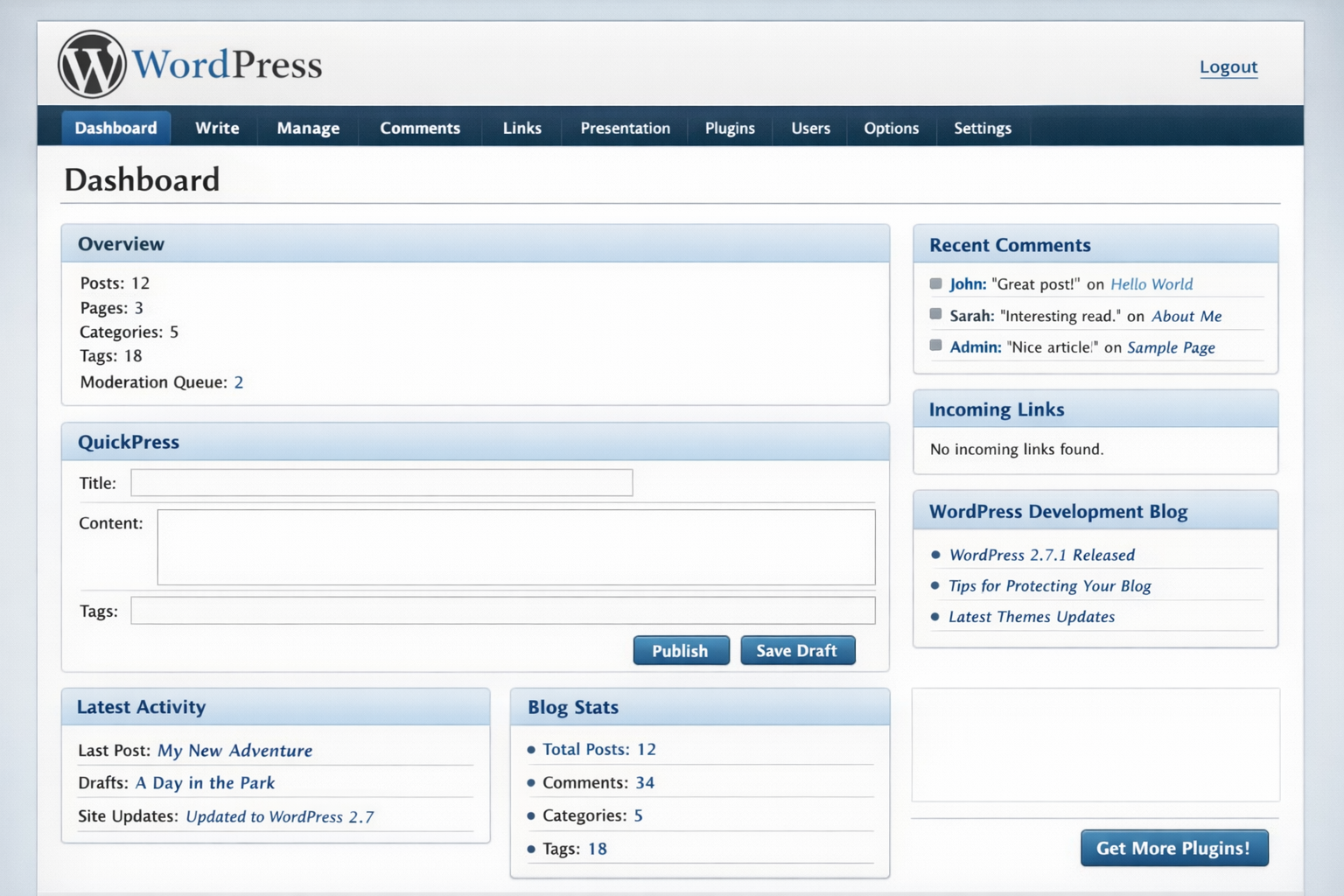
The Real Origin Story (2003)
WordPress started in 2003, and that one date explains a lot about why it’s everywhere in 2026. It began as a simple answer to a simple problem: people wanted an easy way to publish online, and the tools they used were starting to stall.
The story kicks off with a blogging tool called b2/cafelog and a small group of builders who didn’t want it to fade out. What followed became the backbone of millions of sites.
The short answer: WordPress started in 2003
WordPress launched in May 2003. The first public release is commonly known as WordPress 0.7. It came together when Matt Mullenweg and Mike Little decided to keep the b2/cafelog idea alive after development slowed down.
At the time, this wasn’t about running online stores or building full business sites. It was about publishing posts, staying in control of your content, and having software that could keep improving instead of going quiet.
Still, the early choices mattered. Because WordPress started as a practical blogging tool, it grew in a way that kept publishing simple, even as it expanded into full websites.
What WordPress was at the beginning (a simple blog tool)
Early WordPress focused on the basics: writing posts, managing comments, and publishing from a browser-based editor. It made personal sites feel less like coding projects and more like writing in a notebook, just online.

What happened before WordPress: the b2/cafelog backstory
WordPress didn’t appear out of nowhere. It grew out of b2/cafelog, an early open-source blogging platform that already had a real user base. When b2/cafelog updates slowed down, users still needed bug fixes and improvements, so the community looked for a way forward.
That’s where the “fork” happened. A fork is a new project built from existing open-source code, with a new direction and maintainers. If you want the official summary of that early timeline, WordPress.org keeps a helpful page on WordPress origins and version history.
Why open-source made a fast start possible
Open-source meant anyone could review code, suggest fixes, and share improvements. That collaboration built trust early on. Just as important, it kept WordPress from being tied to one company’s priorities.
Key milestones that turned WordPress into a website platform
A few changes helped WordPress move from “blog software” to “site builder”:
- Themes: Users could change a site’s look without redesigning from scratch.
- Plugins: Site owners added features without hiring a developer for every tweak.
- WordPress MU to Multisite: MU supported many sites from one install, later merging into Multisite for networks.
- Gutenberg blocks (WordPress 5.0, 2018): Editing shifted toward blocks, so pages became easier to build and rearrange.

Why the WordPress start date matters if you run a site today
A 2003 start means WordPress has a long track record, a huge community, and endless theme and plugin choices. It also means steady security work. Since WordPress is so popular, it can be a target, so updates and solid hosting aren’t optional.
If you treat updates like oil changes, your site usually runs for the long haul.
Conclusion
WordPress started in May 2003, spun out of b2/cafelog, and grew through themes, plugins, Multisite, and blocks. If you’re building on it now, keep WordPress updated, use SSL, choose reliable hosting, and back up often. A little upkeep beats a late-night recovery.